Innovation & Technology
The Next Big Thing in Tech Isn't an App It's Infrastructure Nobody Sees
We love to talk about consumer technology. The new phone, the new social app, the new AI chatbot.
By
Staff WriterCategory
Innovation & TechnologyReading
3 minPublished
Apr 9, 2026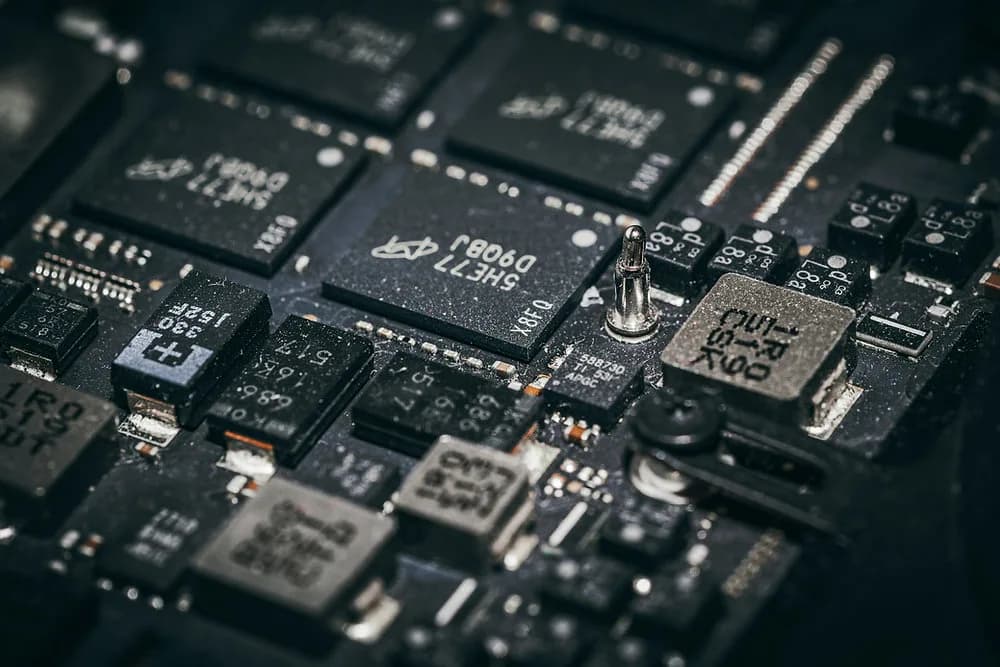
But the most transformative technology being built right now is stuff you'll never see, touch, or interact with directly. It's infrastructure. And it's about to change everything.
Think about the last decade of consumer tech. We got better phones with better cameras. We got social media platforms that are essentially variations of each other. We got streaming services, food delivery apps, ride-sharing services. All useful, some genuinely good. But the marginal improvement curve on consumer apps has been flattening for years. The difference between the 2024 and 2026 version of most apps you use is barely noticeable.
Meanwhile, underneath all of that, a massive transformation is happening in the layers of technology that consumers never interact with but that everything depends on. Cloud infrastructure, edge computing, energy systems, semiconductor architecture, data pipelines, identity and security protocols. This is the plumbing of the digital world, and it's being rebuilt from the ground up.
Why does this matter? Because the infrastructure layer is what determines what's possible at the application layer. Every breakthrough consumer product in the last 20 years was built on top of an infrastructure advance that preceded it. The iPhone was possible because of advances in mobile processors, touch screen technology, and cellular networks. Netflix streaming was possible because of broadband adoption and cloud computing. AI tools like ChatGPT were possible because of GPU computing power and the scaling of transformer architectures.
The next wave of applications that will reshape how we live and work, whatever they turn out to be, will be built on infrastructure that's being developed right now. And the companies building that infrastructure, many of which you've never heard of, are going to be enormously important.
Let me highlight a few areas where infrastructure innovation is especially interesting.
Energy is the big one. The AI boom has created an unprecedented demand for computing power, and computing power requires electricity. Data centers are consuming more energy than some small countries. This is creating a massive market opportunity in next-generation energy infrastructure: advanced nuclear (including small modular reactors), grid-scale battery storage, geothermal systems, and the transmission infrastructure needed to deliver power where it's needed. Without breakthroughs in energy, the AI revolution hits a physical ceiling.
Then there's semiconductor manufacturing. The global chip supply chain is being fundamentally restructured for geopolitical and strategic reasons. New fabrication facilities are being built in the US, Europe, and Japan. New chip architectures optimized for AI workloads are being designed. And entirely new computing paradigms, like neuromorphic chips that mimic the structure of biological neural networks, are moving from research labs to commercial development.
Edge computing is another area that's quietly transformative. Instead of sending all data to centralized cloud servers for processing, edge computing puts processing power closer to where data is generated: in factories, hospitals, vehicles, retail stores. This reduces latency, improves privacy, and enables applications that aren't possible with round-trip cloud processing. Autonomous vehicles, real-time industrial automation, and remote surgery all depend on edge computing infrastructure.
And then there's the identity and security layer, which is arguably the most important infrastructure challenge of the next decade. As more of our lives move online and AI makes it trivially easy to generate convincing fake content, the ability to verify identity, authenticate information, and maintain trust in digital systems becomes critical. The companies solving these problems aren't flashy, but they're essential.
For investors, the implication is clear: look past the consumer apps and pay attention to the companies building the infrastructure that future applications will run on. These are often boring businesses by social media standards. They don't have viral moments or celebrity users. But they have deep moats, recurring revenue, and positioning in markets that are growing for structural reasons.
For everyone else, the takeaway is simpler. The next time someone asks what the "next big thing" in tech is going to be, the honest answer is that it's probably not a thing you'll download. It's a thing that will make a hundred future things possible. And it's being built right now, in places nobody's paying attention to.

Nvidia Beat and Rose Nine Percent. The Sector Went Nowhere.
The strongest possible earnings report from the most important company in artificial intelligence lifted its own stock and almost nothing else. Marvell fell more than ten percent the same week on a gross margin forecast. The AI trade has stopped rewarding participation and started interrogating margins.

Brussels Fined Google a Billion, The Compliance Clock Matters More
Brussels fined Google roughly a billion dollars under the Digital Markets Act on 23 July. The money is immaterial to Alphabet. The compliance order behind it is not, and it establishes a template that reaches well beyond the companies formally designated as gatekeepers.

UK Names Cloud Giants "Systemic": What Critical Third Party Status Means
Microsoft, Google Cloud, AWS and Oracle are now supervised entities in the UK financial system. Here's what Critical Third Party designation actually costs, and why enterprise leaders should expect contract and multi-cloud fallout.
Sponsored placement

An invitation, extended to Powered readers.
Drive the Continental GT S.
Private test drives available for Powered readers through Bentley Motors.
