Leadership
Why the Best Leaders in 2026 Are Unlearning Everything They Were Taught
The leadership playbook that got you here may be exactly what's holding your team back. The most effective leaders in 2026 aren't adding new skills, they're deliberately discarding outdated ones.
By
Staff WriterCategory
LeadershipReading
4 minPublished
Apr 6, 2026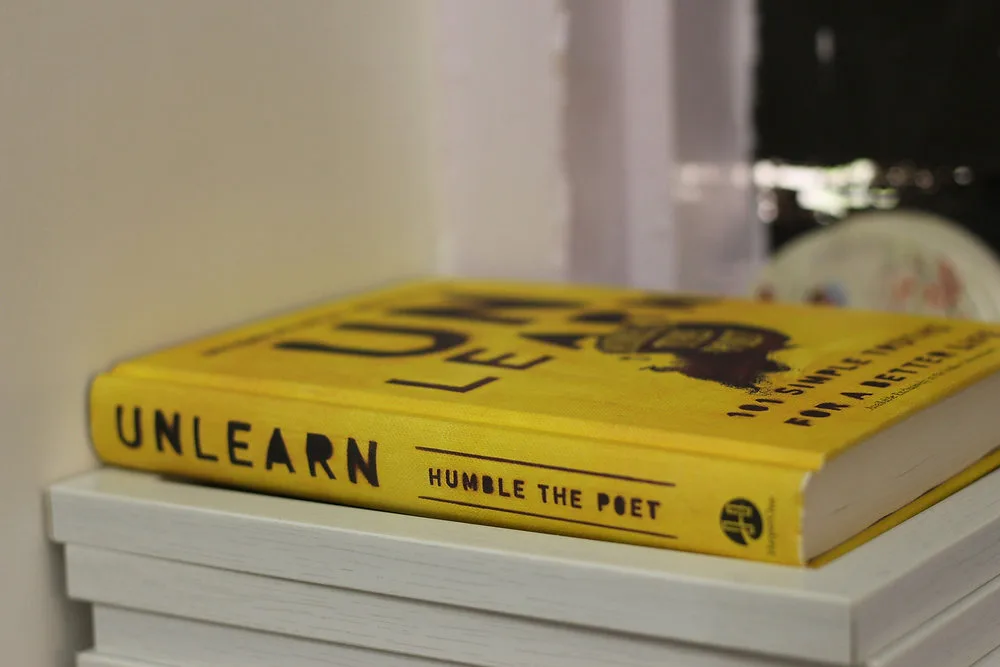
Here's an uncomfortable truth that most leadership coaches won't tell you: a good chunk of what you learned in business school about leading people is probably working against you right now.
Not because the lessons were wrong when they were taught. But because the context has changed so drastically that the old playbook doesn't just fail to help. It actively creates problems.
Think about the foundational principles most of us absorbed about leadership over the past 20 or 30 years. Control the narrative. Project confidence at all times. Have all the answers. Set aggressive targets and hold people accountable. Protect information on a need-to-know basis. These weren't crazy ideas. In a stable, predictable market with a traditional workforce, they worked reasonably well.
But the market isn't stable. The workforce isn't traditional. And the leaders who are thriving right now are the ones who had the courage to unlearn.
Let's start with the big one: the myth of the all-knowing leader. For a long time, executives were expected to have a vision and to articulate it with total conviction. Doubt was weakness. But in a world where the technology landscape shifts every six months and geopolitical uncertainty is the new normal, certainty has become dangerous. The leaders who insist they know exactly where things are headed end up overcommitting to strategies that collapse under real-world pressure.
The unlearning move here is profound. The best leaders today are replacing certainty with clarity. They're clear about values, clear about direction, clear about what success looks like. But they hold their specific plans loosely. They build in decision points where the team can pivot based on new information. They say things like, "Here's what we believe right now, and here's what would change our mind."
Another piece of outdated thinking: the idea that great leaders should be available around the clock. The always-on executive was practically a badge of honor for years. Sleeping with your phone under your pillow, answering emails at midnight, being the first to respond in Slack. We treated burnout like it was a sign of commitment.
The leaders who are unlearning this pattern are discovering something counterintuitive. When they step back, their teams step up. When they stop being the bottleneck for every decision, the organization moves faster. And when they model healthy boundaries, their people burn out less, stay longer, and do better work.
This doesn't mean disappearing. It means being strategic about where you spend your attention. One CEO I spoke with for this piece described her approach as "ruthless prioritization of presence." She's fully engaged in three or four things per week. Everything else, she trusts her team to handle. And her company's performance metrics have actually improved since she adopted this approach, not in spite of her being less involved, but because of it.
Then there's the compensation and motivation question. Traditional leadership assumed that people were primarily motivated by money and advancement. Hit your numbers, get a bonus. Climb the ladder. But the research on motivation has moved way past this. People want autonomy. They want mastery. They want to feel like their work connects to something meaningful. The carrot-and-stick model still works for simple, repetitive tasks, but for the kind of complex, creative work that drives most modern companies, it can actually undermine performance.
Leaders who unlearn the old incentive model start having different conversations with their people. Instead of "What do you need to hit your quota?" they're asking "What kind of work energizes you?" and "Where do you feel like you're growing?" These aren't soft questions. They're strategic ones. Because when you put someone in a role that aligns with their intrinsic motivation, you get performance that no bonus structure could buy.
The hardest part of unlearning isn't intellectual. Most leaders, when confronted with the evidence, agree that the old models are broken. The hard part is behavioral. It means sitting in discomfort. It means tolerating the anxiety of not having all the answers. It means watching your team struggle with a problem and resisting the urge to jump in and solve it for them.
But here's the thing. The leaders who do this work, who actively question their own defaults and rewrite their mental models, they're building something that the old-school leaders never could. They're building organizations that can think for themselves. And in a world that changes faster than any one person can keep up with, that's the only sustainable advantage.

Three Successions in Six Days, and the Question None of Them Answered
The Fourteen-Month Handoff: What Boards Get Wrong About Naming a Successor? Long Runway, Interim CFO, or Internal Promotion: Choosing Your Succession Posture

The No. 2 Exit: Why Boards Underestimate Deputy Departures
Fidji Simo's exit from OpenAI and Sumit Rana's from Epic Systems both happened the same week, for unrelated reasons. Here's why the deputy seat deserves the same succession scrutiny boards reserve for the CEO chair.

LVMH Just Picked Bvlgari's Next CEO. The Decision Is About Watches, Not Jewelry.
LVMH appointed Laura Burdese as Bvlgari's next CEO effective July 1, succeeding Jean-Christophe Babin after his transformational tenure. The succession is well-managed and overdue, but the more interesting question is what kind of strategic positioning the marketing-led appointment signals — and what it tells you about where LVMH thinks Bvlgari's growth has to come from next.
Sponsored placement

An invitation, extended to Powered readers.
Drive the Continental GT S.
Private test drives available for Powered readers through Bentley Motors.
