Business News
The Global Supply Chain Isn't Fixed It's Being Rebuilt From Scratch
Years of disruption have pushed manufacturers, retailers, and governments to redesign global logistics entirely. Nearshoring, redundancy, and real-time data are replacing the just-in-time model that broke down under pressure.
By
Staff WriterCategory
Business NewsReading
3 minPublished
Apr 8, 2026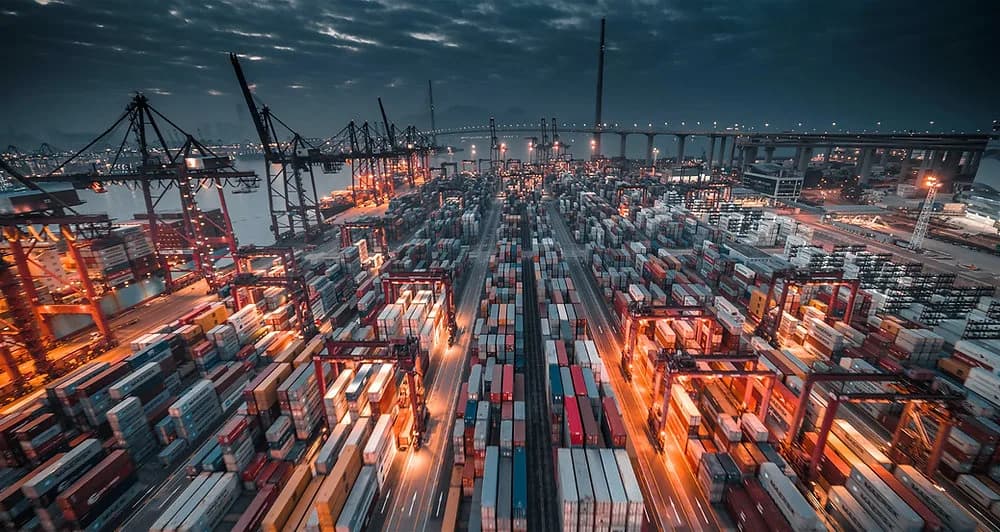
If you've stopped hearing about supply chain disruptions in the news, you might assume the problem has been solved. Shelves are stocked. Shipping times have normalized. The container ship pileups and semiconductor shortages that defined 2021 and 2022 feel like distant memories.
But what's actually happening is far more significant than a return to normal. The entire architecture of global supply chains is being reconstructed, and the implications for businesses of every size are enormous.
For the last 40 years, the dominant supply chain model was built on a simple principle: cost optimization. Source materials and manufacture products wherever it's cheapest. Ship them wherever they're needed. Keep inventories low. Maximize efficiency. This model produced unprecedented economic growth and made consumer goods remarkably affordable. It also created a system that was brittle in ways nobody fully appreciated until a pandemic, a canal blockage, and a series of geopolitical tensions exposed every weak point simultaneously.
The rebuilding that's happening now isn't just about fixing what broke. It's about fundamentally rethinking the priorities. Cost is still important, but it's no longer the only consideration. Resilience, speed, geopolitical risk, and sustainability have all been elevated in the decision-making hierarchy.
The most visible manifestation of this shift is reshoring and nearshoring. Companies that spent decades moving manufacturing to China and Southeast Asia are now building capacity in Mexico, Eastern Europe, and even domestically. Apple has been diversifying its manufacturing base toward India and Vietnam. Semiconductor companies are building fabrication plants in the US, Japan, and Germany with heavy government subsidies. And a wave of smaller manufacturers are setting up operations closer to their end markets, accepting higher labor costs in exchange for shorter lead times and reduced geopolitical exposure.
This isn't happening because companies suddenly became patriotic or because economists decided globalization was a mistake. It's happening because the risk calculus changed. When a factory shutdown in one country can halt production across an entire industry for months, the cost savings of offshore manufacturing start looking less attractive. When trade tensions between major economies can disrupt established supply routes overnight, geographic diversification becomes a strategic imperative.
The technology layer of this transformation is equally significant. Companies are investing heavily in supply chain visibility tools that give them real-time insight into where their materials are, what risks exist at each node of the chain, and how to reroute when disruptions occur. AI and machine learning are being used to predict demand patterns, optimize inventory levels, and identify potential bottlenecks before they become crises.
Digital twins, virtual replicas of physical supply chains, are allowing companies to simulate disruption scenarios and test contingency plans without waiting for a real crisis to expose vulnerabilities. Blockchain-based tracking systems are improving traceability and compliance verification, which matters both for regulatory reasons and for the growing consumer demand for transparency about how products are made.
The implications for small and mid-sized businesses are mixed. On one hand, supply chain diversification creates opportunities. Companies that can offer regional manufacturing, flexible fulfillment, or specialized logistics services are finding new demand. On the other hand, the complexity and cost of building resilient supply chains can be prohibitive for smaller players. Access to the same AI-powered planning tools and diversified supplier networks that multinationals use is getting better, but it's not yet equal.
For investors, this transformation represents one of the largest capital allocation shifts in decades. Hundreds of billions of dollars are flowing into new manufacturing facilities, logistics infrastructure, and supply chain technology. The companies positioned to benefit aren't just the ones building the factories. They're the ones providing the software, the automation, the materials, and the services that the new supply chain architecture requires.
The bottom line is this: the global supply chain isn't going back to the way it was. The pandemic didn't create the vulnerabilities in the old system. It just revealed them. And now, companies and governments around the world are investing in a new model that's more distributed, more transparent, more technologically enabled, and more resilient. The transition will take years and cost trillions. But when it's done, the global economy will be running on fundamentally different infrastructure than it was a decade ago.

Credit Is Loose Right Now, But Not Loose for You
The Federal Reserve chairman told Jackson Hole he would be hard pressed to call financial conditions restrictive, citing tight credit spreads, strong issuance and easier lending standards. In the same remarks he noted that housing and agriculture are showing strain. Both statements are true, and the gap between them is where most small businesses live.

Three Fed Officials Wanted a Hike. The Statement Got Shorter.
The Federal Open Market Committee held rates on 29 July by a nine to three vote, with all three dissenters pushing for an increase rather than a cut. The more consequential change was the statement itself, which is getting shorter on purpose, and what that means for anyone whose planning depended on reading the Fed's intentions in advance.

Record Borrowing, Record Failures: Small Business Runs Out of Defences
The 67 Percent Bankruptcy Spike Has an Eighteen-Month Fuse. Why Small Business Bankruptcies Are Rising Five Times Faster Than Everyone Else's
Sponsored placement

An invitation, extended to Powered readers.
Drive the Continental GT S.
Private test drives available for Powered readers through Bentley Motors.
