Personal Development
The Case for Being Strategically Unproductive
I have a confession. Some of my best ideas have come to me while I was doing absolutely nothing useful. Sitting on a park bench. Staring out a window.
By
Staff WriterCategory
Personal DevelopmentReading
3 minPublished
Apr 8, 2026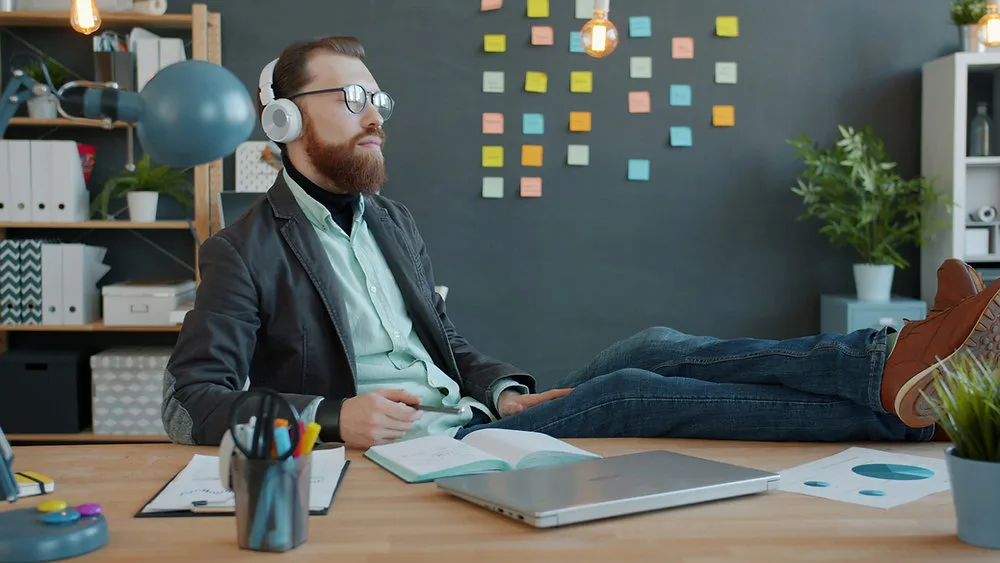
And I don't think that's a coincidence.
We're living through a period of peak productivity obsession. Every hour needs to be optimized. Every walk should be a "walking meeting" or at least accompanied by a podcast. Lunch breaks are for catching up on emails. Even rest has been productified. Sleep optimization, recovery protocols, strategic napping. We've managed to turn doing nothing into something you do wrong if you don't do it efficiently.
But here's the thing. Human cognition doesn't work like a factory line. You can't just increase throughput indefinitely by eliminating idle time. The brain needs slack. It needs unstructured, unstimulated periods where it can consolidate information, make unexpected connections, and process the backlog of experiences and ideas that accumulate during focused work.
Neuroscience has a term for this. It's called the default mode network, and it activates when you're not focused on any particular task. For a long time, scientists thought this was just the brain idling, like a car engine at a red light. But research over the last decade has shown that the default mode network is doing critical work. It's integrating information across different brain regions. It's running simulations of future scenarios. It's making sense of past experiences. In other words, it's doing the deep processing that focused attention can't do.
This is why you get your best ideas in the shower. Your conscious mind is occupied with something mindless (shampooing), which frees up the deeper processing networks to surface connections that were building below your awareness. The idea didn't come from nowhere. It came from hours or days of your brain working on the problem in the background, and it only surfaced because you gave it a moment of quiet.
The implications for how we structure our work and personal lives are pretty significant. If you never give yourself unstructured time, you're essentially shutting down one of the most powerful cognitive systems you have. You might feel busy and productive, but you're trading depth for velocity. You're processing information without ever really understanding it. You're consuming without digesting.
I see this a lot in high-performing professionals. They have packed calendars, optimized routines, and a vague but persistent feeling that something is missing. They're doing more than ever, but they feel less creative, less inspired, less clear about what they actually want. And when I suggest that the answer might be doing less, not more, they look at me like I've lost my mind.
But try it. Block off two hours this week with nothing scheduled. Not "deep work" time. Not brainstorming. Not goal-setting. Actual nothing. Go for a walk without your phone. Sit somewhere comfortable and let your mind wander. Don't feel guilty about it. Don't try to extract value from it. Just exist for a bit.
If this feels uncomfortable, that's telling you something. We've been so conditioned to equate busyness with worth that doing nothing triggers genuine anxiety. But that anxiety isn't a signal that you should get back to work. It's a signal that you've been over-indexed on productivity for so long that your nervous system doesn't know how to be at rest.
The most creative people throughout history understood this intuitively. Darwin took long walks every day. Einstein played violin when he was stuck on a problem. Maya Angelou would sometimes lie in bed for hours, just thinking. These weren't breaks from their real work. They were part of their real work. The unstructured time was where the insights lived.
I'm not suggesting that you abandon structure entirely and become a professional daydreamer. Structure and focus are essential. But so is spaciousness. And most people's lives are so compressed and optimized that there's no room left for the unexpected. No room for the random thought that leads to a breakthrough. No room for the quiet moment of self-awareness that changes how you approach a relationship or a decision.
Being strategically unproductive means recognizing that not all valuable activity looks productive from the outside. It means trusting that your brain is working even when you're not. And it means having the courage to step off the treadmill long enough to remember why you're running in the first place.

Nobody Is Quitting, and That Changes How Careers Work
The Federal Reserve chairman described a labour market at full employment with unusually low turnover, and explained why: the great rematching of workers and employers after the pandemic already happened. If people are largely in the right jobs, the standard advice about advancing a career stops working.

Half of Managers Would Rather Buy AI Than Train a Graduate. They Are Hiring Anyway
The Junior Rung: AI Removed the Tasks That Taught Judgement, Not the Need for It. Why Hollowing Out Entry-Level Work Is a Year-Four Problem Disguised as a Year-One Saving

Three Myths About Main Street AI
With 58% of small businesses now using generative AI, the old assumptions no longer hold. Here's why enterprise budgets, technical hires, and hype skepticism are all the wrong lens for Main Street's AI adoption wave.
Sponsored placement

An invitation, extended to Powered readers.
Drive the Continental GT S.
Private test drives available for Powered readers through Bentley Motors.
