Leadership
LVMH Just Picked Bvlgari's Next CEO. The Decision Is About Watches, Not Jewelry.
LVMH appointed Laura Burdese as Bvlgari's next CEO effective July 1, succeeding Jean-Christophe Babin after his transformational tenure. The succession is well-managed and overdue, but the more interesting question is what kind of strategic positioning the marketing-led appointment signals — and what it tells you about where LVMH thinks Bvlgari's growth has to come from next.
By
Powered EditorialPhotographs
Mehmet Turgut KirkgozCategory
LeadershipReading
5 minPublished
Jun 9, 2026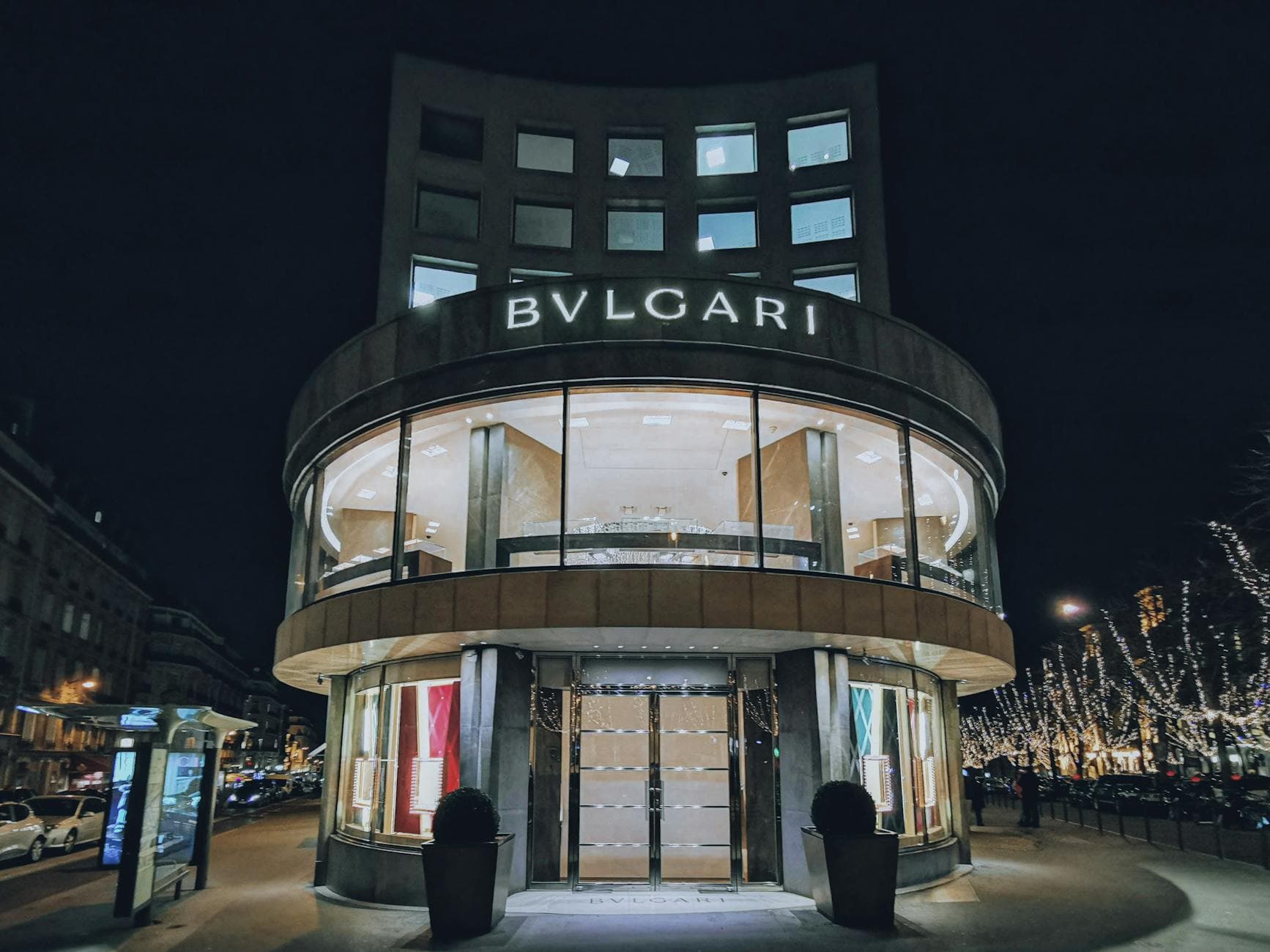
LVMH announced on Thursday, June 4, that Laura Burdese will become Chief Executive Officer of Bvlgari effective July 1, 2026. Burdese succeeds Jean-Christophe Babin, who had led Bvlgari since 2013 through a period of significant brand transformation and who will continue as Chairman of the Board following the transition. The announcement was made through LVMH Watches & Jewelry, the division led by Stéphane Bianchi, who described the change as "a smooth transition from a great leader to an equally remarkable executive."
The succession itself is well-managed by the standards of luxury industry CEO transitions — Babin remains as Chairman, the new CEO has been deputized for nearly two years, and the operational continuity is preserved. What is more interesting is what the appointment signals about how LVMH intends to grow Bvlgari from here, and what the choice of a marketing-and-communication-trained executive over a more conventional jewelry-or-watches operational background tells you about the maison's strategic direction.
For the executive reader following luxury industry dynamics — or watching parallel succession decisions across the LVMH portfolio — three angles are worth examining.
What the succession is, structurally
Bvlgari's Babin era began in 2013 and produced what most luxury industry analysts consider one of the more successful brand transformations of the past fifteen years. Babin came to Bvlgari from TAG Heuer, where he had spent his career, and brought a watchmaking discipline to a Roman jewelry maison that had been better known for high-jewelry signature pieces than for daily-wear watches or accessory categories. Under Babin, Bvlgari expanded its watchmaking presence significantly — including ultra-thin watches that captured world records and meaningful market share in the men's luxury watch category — and built out the Bvlgari Hotels & Resorts portfolio with properties in Milan, Tokyo, Bali, Dubai, Beijing, Shanghai, Paris, Moscow, Rome, and most recently New York. The brand's revenue and profitability rose substantially during the period, and Bvlgari became one of LVMH's more consistently performing maisons.
Laura Burdese's CV inside LVMH is unusually well-shaped for the moment. She joined LVMH nearly ten years ago as President and CEO of Acqua di Parma, the LVMH fragrance house, where she modernized brand positioning and product strategy. She moved to Bvlgari in 2022 as Vice President of Marketing & Communication, taking responsibility for the brand's customer-facing communication architecture during a period when Bvlgari's digital and experiential marketing investments were expanding meaningfully. In July 2024, she was promoted to Deputy CEO, with responsibility broadening to include operational strategy and retail transformation across the brand's portfolio.
Before joining LVMH, Burdese led Eric Bompard, the French cashmere brand, for four years — modernizing the brand and improving its financial performance, according to Lanvin's own language in describing her trajectory. The pre-LVMH experience matters because it establishes that Burdese has demonstrated the brand-modernization capability at a smaller scale before being given larger LVMH brand responsibilities. The progression — Eric Bompard, Acqua di Parma, Bvlgari Marketing & Communication, Bvlgari Deputy CEO, Bvlgari CEO — is the LVMH internal-promotion playbook running cleanly through a senior maison.
The succession is structurally similar to how LVMH has handled previous senior maison transitions: a long-tenured CEO transitions to Chairman while a deputized executive with operational and brand experience moves into the CEO seat with substantial continuity built in. The contrast is with senior maison transitions that have been more disruptive — the recent Dior creative-and-business reshuffles, or the Christian Dior Couture leadership changes in 2024–2025. Bvlgari is being treated as a stable, well-performing maison that deserves a continuity succession rather than a transformation succession.
What the marketing-led background signals about strategy
The interesting reading of the appointment is not in the succession structure but in the strategic positioning the appointment signals.
A jewelry maison appointing a marketing-and-communication-trained executive as CEO is not the obvious choice. The conventional choice for a senior luxury jewelry CEO would be a candidate with deep operational background in either jewelry manufacturing, watchmaking, or luxury retail — credentials that establish authority over the product categories that drive the brand's revenue. Burdese's background is in brand positioning, marketing strategy, and customer experience, with the Acqua di Parma fragrance experience being a brand-modernization assignment rather than a hard-goods operational role.
The strategic positioning the appointment signals is that LVMH does not believe Bvlgari's next growth chapter will come from operational expansion in jewelry manufacturing or from product-engineering breakthroughs in watchmaking. Both of those categories are well-developed under Babin's tenure. The growth chapter LVMH appears to be positioning for is in brand experience, customer relationship architecture, hospitality integration, and the cross-category brand-extension work that maximizes value from the brand equity Babin built over the past twelve years.
The hospitality integration angle is particularly worth attention. Bvlgari Hotels & Resorts has grown to a meaningful portfolio under Babin's tenure, with the New York property representing one of the brand's largest recent investments. The hospitality business has different operating dynamics than the jewelry-and-watches business — it requires different revenue management, different partnerships, different brand-experience design, and different customer relationship infrastructure. A CEO with marketing-and-communication strength and a track record of brand modernization at multiple price points is well-suited to leading the hospitality business as a growth driver alongside the existing jewelry and watch lines.
The watchmaking category is the other strategic frontier. Bvlgari has built a credible men's watch position under Babin, but the broader luxury watch market is consolidating and differentiating in 2026 in ways that require sustained marketing investment — the Swatch x Audemars Piguet Royal Pop collaboration, the Patek and Vacheron downward extensions, the broader category competition for collector attention. Bvlgari's watch business is well-positioned but will require more aggressive brand communication and customer relationship investment to defend and expand its share. A marketing-and-communication CEO is structurally suited to leading that work.
The succession looks like a continuity story. The CV behind it suggests — and this is analytical inference rather than LVMH's stated framing — that the next growth chapter for Bvlgari is in watches and brand experience as much as in jewelry. LVMH has not characterized the appointment in those terms publicly, and Burdese herself may steer the brand differently than the CV would predict. But the choice of a marketing-and-communication-trained executive over a more conventional jewelry or watches operational background is a real signal, even if the official framing is smooth transition.
What this tells you about LVMH portfolio strategy
Three implications worth examining for any operator watching LVMH brand management at the portfolio level.
The first is that LVMH's senior leadership succession decisions are increasingly being made with growth-vector specificity. The conventional luxury industry pattern has been to appoint successors who match the predecessor's profile, preserving operational continuity. LVMH is increasingly appointing successors whose profiles match where the brand's next growth has to come from rather than where the brand's last growth came from. The Burdese appointment is consistent with the Dior 2024–2025 reshuffles, the Stéphane Bianchi appointment to head LVMH Watches & Jewelry, and other senior moves that have prioritized strategic vector over operational continuity.
The second is that brand-experience and hospitality integration is emerging as a strategic priority across the LVMH portfolio. Bvlgari Hotels is one of the most developed maison hospitality businesses inside LVMH, but the broader portfolio includes hospitality assets at Cheval Blanc, Belmond, and selective integrations elsewhere. The Burdese appointment positions one of LVMH's most successful maisons for accelerated hospitality and brand-experience investment. Expect parallel signals across other LVMH maisons over the next eighteen months as the portfolio strategy becomes more visible.
The third is that the LVMH internal-development pipeline is working as designed. Burdese's progression — Eric Bompard before LVMH, then Acqua di Parma, then Bvlgari Marketing, then Bvlgari Deputy CEO, then Bvlgari CEO — is the LVMH playbook for developing senior maison leadership. Each step expanded the brand size, the operational complexity, and the strategic responsibility. The promotion to CEO follows a fifteen-year development arc inside the LVMH system. Competing luxury groups (Richemont, Kering, smaller independent houses) do not have internal-development pipelines of comparable depth or consistency. The LVMH advantage in senior leadership continuity is a structural moat that becomes more visible with each smooth succession.
For Powered's mid-market reader, the transferable insight is that senior leadership succession decisions tell you more about strategic direction than most public commentary on the same companies. The Bvlgari announcement looks like a continuity story in the press coverage. The actual signal is in the CV of the successor and what that CV is structurally suited to do next. Mid-market operators evaluating their own succession decisions — or watching senior succession at companies they partner with, compete with, or invest in — should be reading the CVs against the strategic vectors rather than against the predecessor profiles. The match between successor capability and growth vector is the variable that matters.
Babin's tenure built the foundation. Burdese's tenure will be measured by what gets built on top of it. The early signal is that LVMH thinks the next chapter is more about brand experience and watches than it is about jewelry. Whether that read is correct will become visible over the next three to five years.

Three Successions in Six Days, and the Question None of Them Answered
The Fourteen-Month Handoff: What Boards Get Wrong About Naming a Successor? Long Runway, Interim CFO, or Internal Promotion: Choosing Your Succession Posture

The No. 2 Exit: Why Boards Underestimate Deputy Departures
Fidji Simo's exit from OpenAI and Sumit Rana's from Epic Systems both happened the same week, for unrelated reasons. Here's why the deputy seat deserves the same succession scrutiny boards reserve for the CEO chair.
Two-Thirds Of Global Executives Plan To Hire For Human-Centered Skills. The Hiring Funnel Hasn't Caught Up.
McKinsey found that two-thirds of global executives plan to prioritize human-centered capabilities — problem-solving, adaptability, collaboration - in 2026 hiring. But the hiring funnel and screening infrastructure most companies operate is calibrated for credentials, not capabilities.
Sponsored placement

An invitation, extended to Powered readers.
Drive the Continental GT S.
Private test drives available for Powered readers through Bentley Motors.
